

Kej
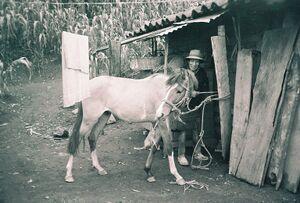
Jun ajtijol ichaj awaj k'o nimalaj taq rixk'iyaq xuquje' uwi' xuquje' uje' man e pach'um taj, kkoj che ri ukejaxik, pa taq xik'inem xuquje' che arel eqa'n xuquje' che ujuruxik eqa'n.
Ri kej man ke' riqitaj taj pa uqajb'al q'ij ulew arechi' k'a maja' na ke'b'o'kulo ri kaxlan taq winaq. Rumal k'u re, ek'o nik'iaj ch'ab'al Maya ri k'a kki koj ri tzij "mazat" chre ri uk'utik uwach ri "kej".
English
A large plant-eating animal with solid hoofs and a flowing mane and tail, used for riding, racing, and to carry and pull loads.
Horses were not found in the western hemisphere prior to European invasions. For this reason, there are some of the Mayan languages that use the word for "deer" to describe "horse."